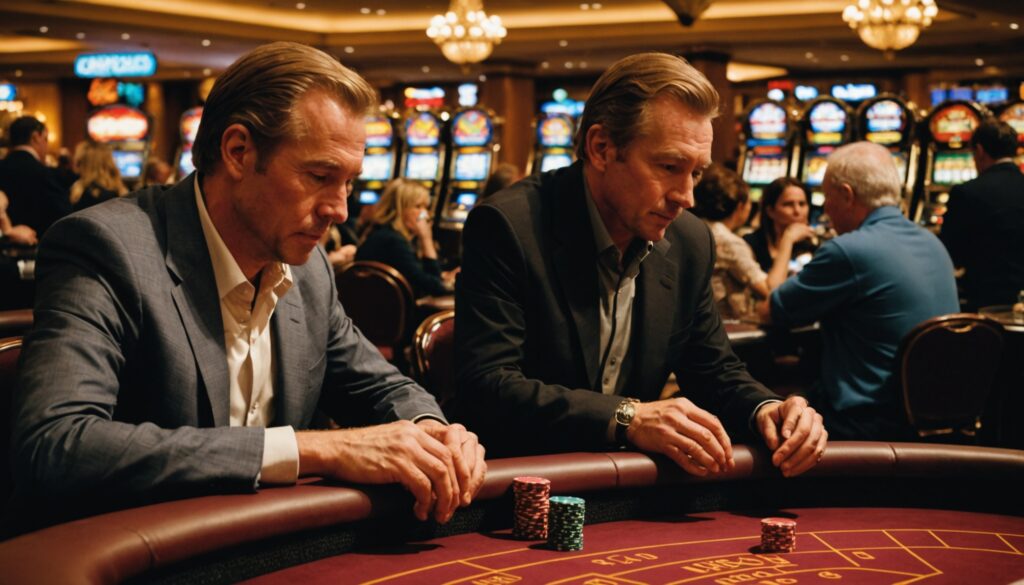

Taking a mate to the casino for the first time is equal parts brilliant and terrifying.
His name’s Danny. We’ve been mates since sixth form, and somehow in all that time I’d never managed to drag him to a casino. He’s not a gambler — barely does the odd lottery ticket — but after a few pints one Friday he finally said yes. I booked us into a Grosvenor in town, told him to bring £60 and expect to lose it, and we were on.
What followed was one of the more entertaining nights I’ve had in a casino, and not just because of the gambling. Watching someone experience a casino for the first time when you’ve been going for years is genuinely fascinating. You notice things you’d completely stopped noticing. The noise, the layout, the unwritten rules. All of it.
So here’s how the night went — the good bits, the awkward bits, and everything Danny got wrong before he got it right.
Getting Through the Door
First thing worth knowing if you’re bringing a friend to the casino for the first time: the registration process catches everyone off guard. Danny didn’t know you had to sign up as a member before you could even walk onto the floor. He’d brought his driving licence, thankfully, but he still looked mildly offended that a casino was asking for his details before letting him lose his money.
I explained that it’s standard in the UK — most casinos operate under a membership system, even if it’s just a formality. Some places have a 24-hour delay before you can play, which is worth checking before you turn up on a whim. Grosvenor let us in straight away, which was handy.
Once we were through, I watched Danny’s face do that thing everyone’s face does the first time. Eyes going everywhere. The card tables, the roulette wheels, the slot machines lining the walls, the bar in the corner. He didn’t know where to look. I’ve seen it before and it never gets old.
The Chip Conversation Nobody Has Beforehand
I should have warned him about chips before we arrived. That’s on me.
Danny walked straight up to a blackjack table and asked the dealer if he could “just pay with his card at the table.” The dealer was polite about it. I was less polite. We went to the cash desk, got him sorted with chips, and I spent the next five minutes explaining why casinos use chips instead of cash — it’s psychological, it’s practical, it makes the whole thing flow smoother — and he nodded along like I was explaining how a boiler works.
If you’re taking someone for their first time casino experience, just cover the basics beforehand:
- You buy chips at the cash desk or sometimes at the table itself — ask first
- Different tables have different minimum bets — check before you sit down
- You cash out chips at the desk, not by handing them to the dealer
- Tipping the dealer is optional but appreciated — you tip by making a bet for them, not by handing cash over
None of this is obvious if nobody tells you. I just assumed he’d figure it out, which was naive of me.
Roulette First — Always Roulette First
I always start first-timers on roulette. It’s the easiest game to understand quickly, the bets are flexible, and you can start on outside bets — red/black, odd/even — without needing to know anything at all. There’s no strategy to learn on the spot, no other players to worry about, and the pace is forgiving.
Danny took to it immediately. Within three spins he was doing what everyone does: chasing a pattern that doesn’t exist. Red had come up four times in a row so naturally he threw £5 on black “because it’s due.” I explained that roulette has no memory, that each spin is independent, that the wheel doesn’t know or care what just happened. He nodded. Then put another £5 on black anyway.
It came in. He looked at me like he’d just proved me wrong about something. I let him have it.
By the end of the roulette session he was up about £18, which is the worst possible outcome for a first-timer because now he thinks he’s got a feel for it.
The Blackjack Lesson
Moving Danny to blackjack was where things got properly interesting. This is a game where your decisions actually matter, and explaining basic strategy to someone in real time, at a table, with other players waiting, is not the ideal classroom environment.
I gave him the short version before we sat down:
- Always stand on 17 or higher
- Always hit on 8 or under
- Double down on 11 if the dealer’s showing a weak card
- Never take insurance — just don’t
He followed it mostly. Then on one hand he had 15, the dealer was showing a 6 — a classic “dealer bust card” situation — and I told him to stand. He looked horrified. “But I’ve got 15, that’s rubbish.” I told him to trust the math. He stood, the dealer flipped a 10 for 16, then drew a 9 and busted. Danny won the hand and immediately acted like he’d been playing blackjack for twenty years.
He lost the next three hands by ignoring the advice, but that’s part of it. Learning by doing, even when the doing is expensive.
The Moment It All Clicked
About two hours in, something shifted. Danny stopped asking me what to do on every hand. He started watching the dealer more carefully, tracking what cards had come out (loosely — he wasn’t counting, just paying attention), and making his own calls. Some were wrong. Some were right. But he was engaged in a way he hadn’t been at the start.
This is the thing about going to a casino with a friend for their first time — there’s a specific moment where they stop being a tourist and start being a player. It usually happens somewhere between the first win and the first proper loss. Danny’s moment came when he lost £20 in about four hands and didn’t flinch. He just rebought, composed himself, and got back to it.
That’s not nothing. A lot of people tilt badly when the losses stack up quickly. He didn’t. I was quietly impressed.
How the Night Ended
Final tally: Danny lost £35 of his £60, which honestly isn’t bad for a first session involving roulette, blackjack, and one ill-advised visit to a three-card poker table that I tried to talk him out of. He said it felt like more because of how the night ebbed and flowed — he was up at one point, felt invincible, then gave most of it back.
I ended the night down £20, which is fairly standard for me on a session where I’m half-playing, half-babysitting.
Some first time casino tips I’d genuinely pass on if you’re doing this with someone:
- Set a loss limit before you walk in — for both of you — and agree you’ll leave when it’s gone
- Start on roulette or low-stakes slots to get comfortable with the environment
- Don’t rush them onto complex games — let them find their own pace
- Explain the etiquette quietly before you approach a table, not at it
- Have a drink, have a laugh — you’re not there to grind, you’re there for a night out
- Let them make their own mistakes — that’s genuinely how you learn
Would I Take Him Again?
Yeah, without question. Danny texted me the next morning asking when we were going back, which is either a great sign or a terrible one depending on how you look at it. I told him to wait a few weeks, keep it occasional, and not to start watching YouTube videos about blackjack strategy at 1am. He sent back a laughing emoji. I’m not sure he took the advice.
The honest truth about bringing a friend to the casino for the first time is that it’s a brilliant night out if you go in with the right attitude. It’s not about winning. It’s about the experience — the tension of a hand, the ridiculous near-misses on roulette, the strange little community of people sat around a table at midnight making decisions with their money.
Danny got it. Not everyone does. He’s a natural, which worries me slightly.
Take your mate. Set a budget. Have a proper laugh. Just maybe don’t let them near the three-card poker table until they’ve been at least three times. Trust me on that one.