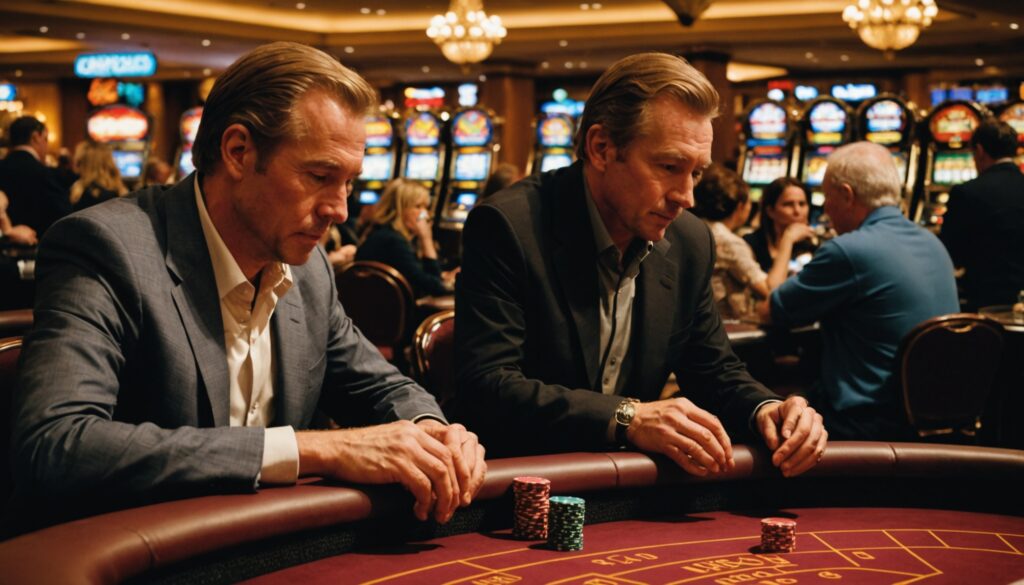

Blackjack basic strategy genuinely reduces the house edge — but it won’t save you from bad runs or bad tables.
I’ve been playing blackjack on and off for about six years. Pubs, casinos, online, live dealer — the lot. And for most of that time, I played on gut instinct like a complete muppet. Hit on 15 because I felt lucky. Stand on 12 because I was scared. You know how it goes. Then someone shoved a basic strategy card in my hand at Grosvenor one night and said “just follow this, you’ll thank me later.”
That was three years ago. Since then I’ve genuinely tried to track my sessions, stick to the card, and figure out whether blackjack basic strategy is the real deal or just something people say to sound clever at the table. Here’s what I actually found.
What Is Blackjack Basic Strategy, Actually?
If you’ve never looked into it properly, the blackjack strategy card is a mathematically worked-out chart that tells you the optimal play for every possible hand combination. Your cards versus the dealer’s upcard. Hit, stand, double down, split — it covers everything.
It’s not guesswork. It’s not a system someone made up on a forum. It was calculated using probability — running through every possible outcome of every possible hand millions of times. The result is a grid that tells you, statistically, the best move to make in any given situation.
The key thing most people don’t realise: basic strategy doesn’t tell you how to win. It tells you how to lose less. There’s a big difference. Used correctly on a standard European blackjack game, it brings the house edge down to somewhere around 0.5%. Without it, you’re probably giving the casino 2-4% depending on how badly you’re playing.
That gap is the whole point.
My First Proper Session Using the Card
I’ll be honest — the first time I sat down and properly committed to following basic strategy, it was uncomfortable. I was at a £10 minimum table at a casino in Birmingham, and I had a printed strategy card in my pocket. Yes, I actually pulled it out. Casinos allow it, by the way. They don’t care, because they know the house still wins long-term regardless.
The looks I got from other players were something. One bloke tutted when I doubled down on 11 against a dealer 6. He’d been at the table longer than me and was down about £200, so I didn’t take his tutting personally.
That night I ended up about £65 up after two hours. Not life-changing, but it felt different. I felt like I was actually playing rather than just hoping.
The Myth: “Basic Strategy Means You’ll Win”
This is where I have to be straight with you, because there’s a lot of rubbish talked online about this.
Basic strategy does not mean you’ll win. Not even close. What it means is that over a large enough sample of hands, you’ll lose less than someone playing blind. The house edge still exists. Variance still exists. You can follow every single play perfectly and still walk out £300 down.
I’ve had sessions where I’ve played flawlessly — checked every decision, made every correct move — and got absolutely destroyed. Three sessions in a row last winter where I lost between £80 and £150 each time despite doing everything right. That’s just blackjack odds being what they are. Short-term variance is brutal.
The flip side: I’ve also had sessions where I’ve played like an idiot on a stag do, barely looked at the card, and walked away up £200. Variance goes both ways.
The strategy isn’t a guarantee. It’s a framework that tips the maths slightly more in your favour. Nothing more than that.
The Reality: What Basic Strategy Actually Does Over Time
Here’s where it gets more interesting. Over the last two years I’ve kept rough notes on about 40 sessions — mostly live casino and in-person, a handful online. Not scientific, not perfectly tracked, but honest enough to spot a pattern.
When I follow basic strategy consistently:
- My losing sessions tend to be smaller losses
- I stay in the game longer on the same buy-in
- I make fewer “oh god why did I do that” decisions
- My overall results across a month are closer to breakeven than not
When I don’t follow it — usually because I’m tired, had a drink, or let someone at the table put me off:
- I lose faster
- I make stupid stands when I should hit
- I miss doubles that would’ve paid off
- I end up leaving earlier and more annoyed
It’s not a dramatic difference every single session. But across 40 sessions? The sessions where I stuck to the card were measurably better. Not wildly profitable — but less damaging. Which, honestly, when you’re playing with real money for entertainment, matters a lot.
The Plays That Feel Wrong But Are Right
This is probably the most useful bit if you’re just getting into basic strategy explained for the first time. Some of the correct plays feel deeply unnatural until you understand the logic.
Standing on 12 against a dealer 4, 5, or 6
You’ve got a rubbish hand and you’re standing on it. Feels insane. But the dealer has a decent chance of busting with those low cards, and you don’t want to risk busting yourself. The maths says stand. The gut says hit. The gut is wrong.
Doubling on 11 against almost anything
This one I love now. Doubling on 11 against a dealer’s 10 still makes some people nervous, but the expected value is positive. You do it. Every time. No hesitation.
Never taking insurance
The dealer shows an ace and offers insurance. It feels like protection. It’s actually a side bet with terrible odds — roughly 7% house edge on that bet alone. The card says no. Always no. I’ve never taken it since learning this.
Splitting 8s against a dealer 10
This one hurts. You’ve got 16 — already a terrible hand — and you’re being asked to double your money at risk against a strong dealer card. But the maths says splitting gives you a better expected outcome than playing 16 against a 10. It doesn’t feel right. Do it anyway.
Things the Card Can’t Help You With
A few honest caveats, because no one tells you this stuff upfront:
- Different rules, different strategy. Basic strategy changes depending on the variant. Single deck, multi-deck, S17, H17, whether doubling after splits is allowed — all of it affects the optimal plays. The generic card you find online might not be right for the specific game you’re sitting at.
- It won’t fix a bad table. If the table’s paying 6:5 on blackjack instead of 3:2, walk away. No strategy card compensates for that. It’s a significantly worse game and you’re just donating money.
- Emotion and alcohol. The card only works if you actually follow it. After a few pints at the casino bar, your ability to consult a strategy chart and override your instincts drops considerably. I speak from experience.
- Bankroll management still matters. You can play perfect basic strategy and still go broke if you’re betting £50 a hand with a £200 bankroll. The maths needs room to breathe.
Is It Worth Bothering With?
Yes. Genuinely, yes — but for the right reasons.
If you’re hoping blackjack basic strategy is a secret weapon that’ll have you consistently beating the casino, you’re going to be disappointed. It’s not that. The house still has an edge. You will still have losing nights. That’s just the reality of gambling.
But if you’re going to play blackjack anyway — and plenty of us are, because it’s a good game that’s actually fun — then playing with basic strategy is just the sensible thing to do. You’re reducing the house edge to the minimum possible without counting cards. You’re making decisions based on maths rather than feeling. You’re giving yourself the best possible chance within a game that’s still, fundamentally, designed for the casino to win.
I keep the app on my phone. I’ll pull it up at the table if I’m unsure. I don’t care who sees. The bloke tutting next to me usually leaves the table before I do.
Learn the card. Use the card. Just don’t expect it to do more than it actually does.