
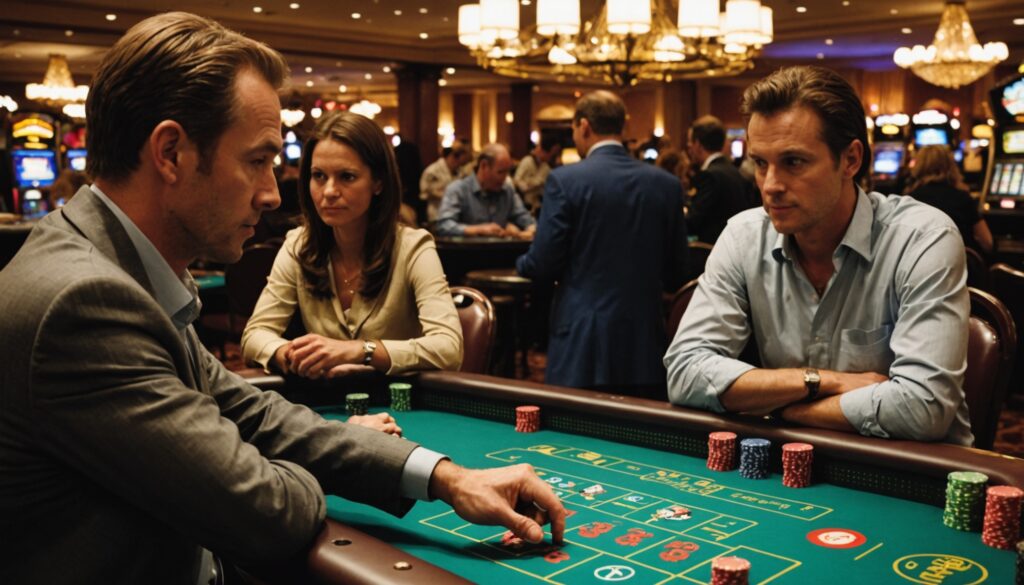
Craps is the loudest, most confusing-looking game in any casino, but once you understand two basic bets, you’re genuinely good to go.
I avoided the craps table for about three years. Every time I walked past one, it looked like organised chaos — people shouting, chips flying everywhere, some bloke in the corner doing a little celebration dance, and me having absolutely no idea what was happening or why. It felt like everyone else had been sent a memo I never received.
Eventually I forced myself to learn, and honestly? I was furious it took me so long. It’s not that complicated. The table just looks complicated. So if you’re in the same boat I was, this is the guide I wish I’d had — no waffle, no jargon overload, just the stuff that actually matters when you’re standing there for the first time.
Why the Craps Table Looks So Intimidating (And Why It Doesn’t Need To)
Let’s get this out of the way first. The craps table layout is genuinely overwhelming at first glance. There are boxes, numbers, strange phrases like “Come,” “Don’t Pass,” “Hardways,” “Any Craps” — it reads like someone designed it specifically to confuse newcomers.
But here’s the thing: most of those boxes are bets you don’t need to touch. Especially when you’re starting out. The whole table is basically split into bets that are worth making and bets that exist to drain your money faster. We’ll get to that.
The other intimidating thing is the crowd. When a craps table is running hot, it’s loud. People are cheering, high-fiving, stacking chips like it’s a competition. That energy is actually one of the best things about craps — but when you don’t know what’s going on, it just adds to the confusion. My advice: find a quieter table to start, or visit during off-peak hours. The dealers are much more likely to walk you through things when it’s not mental busy.
The Craps Rules You Actually Need to Know
Right. Let’s talk craps rules in plain English.
One person throws the dice at a time — that’s the “shooter.” Everyone at the table bets on what the shooter will roll. The game runs in rounds, and each round has two phases:
- The Come-Out Roll: This is the first roll of a new round. Before this roll, you place your bet.
- The Point Phase: If the Come-Out roll lands on 4, 5, 6, 8, 9, or 10, that number becomes “the point.” The shooter then keeps rolling, trying to hit that number again before rolling a 7.
On the Come-Out roll specifically:
- Roll a 7 or 11 — that’s a natural. Pass line bets win immediately.
- Roll a 2, 3, or 12 — that’s craps. Pass line bets lose immediately.
- Roll anything else — that number becomes the point, and the game continues.
Once the point is set, the shooter keeps rolling until they either hit the point again (Pass line wins) or roll a 7 (Pass line loses — this is called “sevening out”). That’s the core of it. Honestly. Everything else builds on this.
The Two Bets Every Beginner Should Start With
When I’m explaining how to play craps to someone who’s never done it, I tell them to forget everything on the table except two bets to start with.
The Pass Line Bet
This is the most fundamental bet in craps. You put your chips on the Pass Line before the Come-Out roll. You’re betting that the shooter will either roll a 7 or 11 straight away, or establish a point and then hit it again before sevening out. The house edge on this bet is about 1.41%, which is genuinely decent for a casino game.
This is the bet most people at the table are making. When the shooter wins, everyone on the Pass Line wins. That’s why people cheer together — you’re all on the same side.
The Odds Bet
Once a point is established, you can place an additional bet directly behind your Pass Line bet called the Odds bet. This is the single best bet in any casino — the house has zero edge on it. It pays true odds depending on the point number.
Most casinos let you bet 2x or 3x your Pass Line bet in Odds. Some let you go higher. Always take the maximum odds you can afford — it’s the only truly fair bet in the building.
Just those two bets together — Pass Line plus Odds — give you a really solid, low house-edge game. You don’t need anything else to start.
The Craps Table Explained: Where to Put Your Chips
Getting the craps table explained visually makes a massive difference. Here’s a quick breakdown of the main areas:
- Pass Line: The long bar running around the edge of the table. Your starting bet goes here.
- Don’t Pass Bar: Right next to the Pass Line. This is betting against the shooter. Works fine mathematically, but other players tend to give you funny looks because you’re essentially rooting for everyone to lose. I avoid it at busy tables just for the social vibe.
- Come / Don’t Come: Similar to Pass/Don’t Pass but placed after the point is set. You can ignore these for now.
- Place Bets (the number boxes 4, 5, 6, 8, 9, 10): You’re betting a specific number will be rolled before a 7. The 6 and 8 Place bets are decent value. The rest, less so.
- Proposition Bets (centre of table): One-roll bets with terrible odds. “Any Seven,” “Any Craps,” “Hardways” — these are the ones that look exciting and drain you quietly. Leave them alone until you really know what you’re doing.
Mistakes I Made That You Can Avoid
I’m going to save you some money here.
- Spreading chips all over the table: First time I played, I was chucking chips on Hardways and Proposition bets because it felt like I was “getting involved.” I was just burning money faster. Stick to Pass Line and Odds until you’re comfortable.
- Not taking Odds: I didn’t even know the Odds bet existed for my first couple of sessions. I was leaving the best bet on the table completely untouched. Don’t be me.
- Touching the dice with two hands: Small thing, but there’s etiquette around this. You throw with one hand only, and you don’t move the dice off the table. Dealers will pull you up on it and it holds up the game.
- Not watching a few rounds first: You’re allowed to just stand at the table and watch for a bit before buying in. I wish I’d done that. The dealers don’t mind — they’d rather you understand what’s happening before you start asking questions mid-roll.
- Forgetting to tip the dealers: This isn’t mandatory, but when a table is going well and people are winning, it’s decent form to throw the dealers a small bet occasionally. The social side of craps is part of the fun — lean into it.
Is Craps Worth Playing? My Honest Take
For a craps for beginners guide, I’d be doing you a disservice if I just said “yeah it’s great, get stuck in.” So let me be straight with you.
Craps is one of the better games in the casino mathematically, particularly if you stick to Pass Line and Odds. The house edge is lower than most slots and competitive with blackjack if you’re playing it right. But it’s still gambling — the house still wins long-term, full stop.
What craps has that a lot of other games don’t is genuine atmosphere. When a table is running hot and everyone’s winning, it’s one of the best experiences you can have in a casino. I’ve had sessions where strangers are hugging each other because the same shooter’s been going for twenty minutes. That doesn’t happen at the blackjack table.
But I’ve also had sessions where the 7 shows up every third roll and you watch your stack disappear in about fifteen minutes. That happens too. Set a budget before you walk up, decide what you’re happy to lose, and treat anything above that as a bonus.
The Short Version If You’re Reading This in a Casino Car Park
Look, if you’ve only got two minutes before you go in:
- Put your chips on the Pass Line before the Come-Out roll
- Once the point is set, put the maximum Odds bet behind your Pass Line chip
- Ignore most of the rest of the table for now
- Cheer when the point hits, commiserate when it doesn’t, and enjoy yourself
Craps looked scary to me for years and I genuinely regret not learning sooner. It’s loud, it’s social, and when it goes well, there’s nothing quite like it. Give it a go — you’ll wonder what took you so long.