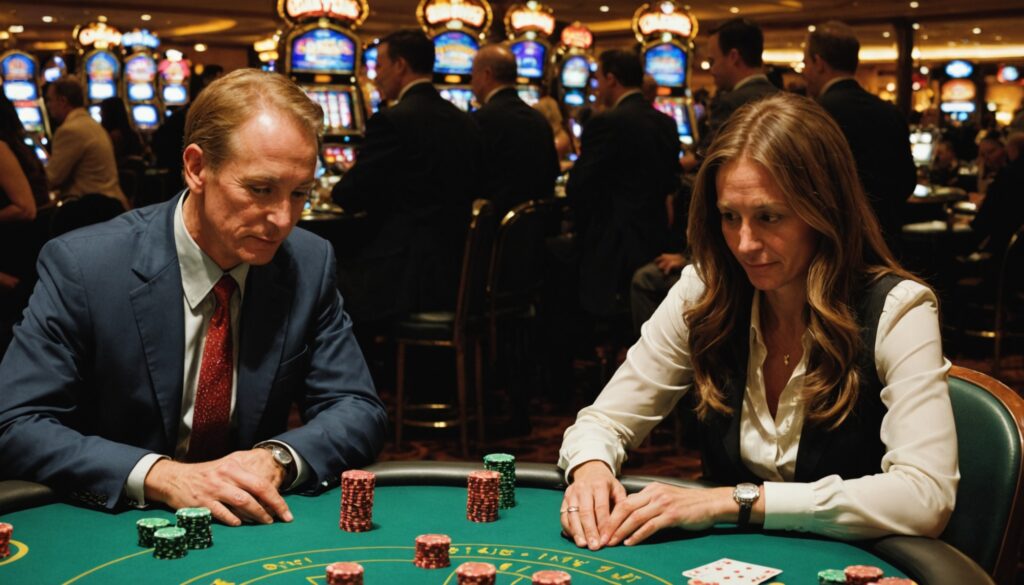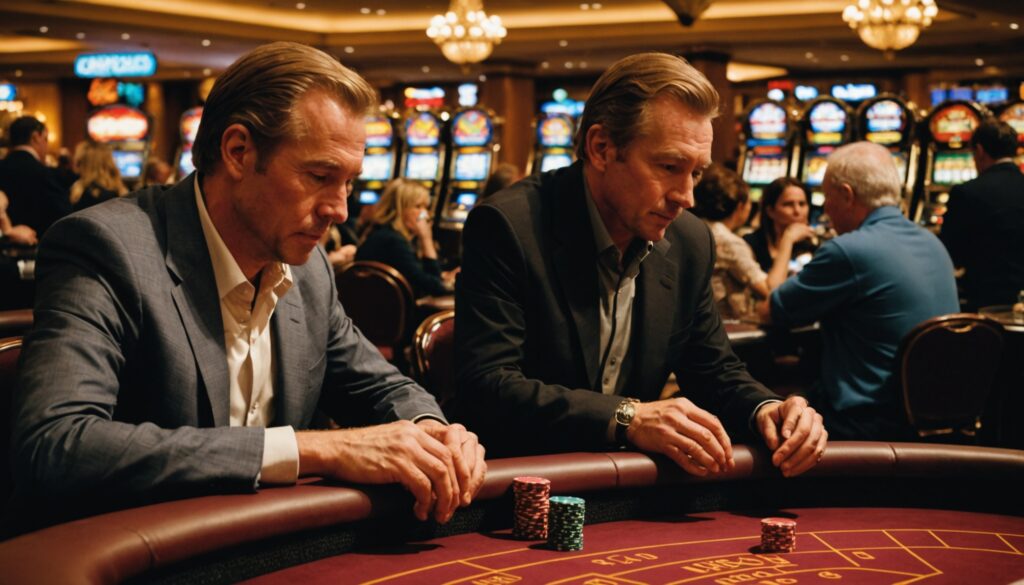

Spanish 21 looks flashier than regular blackjack, but once you strip it back, the better choice depends entirely on how you play.
I came across Spanish 21 properly for the first time at a casino in Birmingham about three years ago. The table had this whole separate section, bright felt, a slightly different layout, and a dealer who looked mildly smug whenever someone lost a hand they thought they’d won. I sat down without really knowing what I was doing, lost about £60 in forty minutes, and walked away convinced it was a scam. Turns out it wasn’t a scam — I just had no idea what I’d signed up for. So here’s what I’ve learned since then, laid out properly for anyone else who’s stood at that table looking confused.
What Actually Is Spanish 21?
Before you can compare Spanish 21 vs blackjack, you need to understand what makes Spanish 21 different at a fundamental level. The clue’s sort of in the name — it uses a “Spanish deck,” which sounds exotic but basically just means they’ve removed all four 10s from each deck. Not the face cards. Just the 10s specifically.
So you’re playing with 48-card decks instead of 52. Usually six or eight of them in a shoe. On the surface that sounds like a minor tweak. In practice, it shifts the entire balance of the game because 10-value cards are absolutely central to blackjack strategy. They’re what make doubling down powerful, what drive the dealer bust rate, what make card counting work. Pull those out and the whole thing changes shape.
The casinos aren’t stupid though. They know removing the 10s hurts players, so they compensate with a bunch of rule bonuses that make the game look more appealing. Whether the tradeoff actually works in your favour is what we’re here to figure out.
The Rule Differences You Need to Know
This is where Spanish 21 rules get interesting. Compared to a standard blackjack game, Spanish 21 typically offers:
- Player 21 always wins — even if the dealer also has 21. In regular blackjack, that’s a push. Here you take the money.
- Player blackjack always beats dealer blackjack — again, no push. You win outright.
- Late surrender allowed — after the dealer checks for blackjack, you can fold half your bet. Many standard tables don’t offer this.
- Double down rescue — you can double down, then if you don’t like your third card, you can take back the doubled portion and surrender. That’s genuinely useful.
- Re-splitting aces — usually allowed, sometimes up to four hands.
- Doubling on any number of cards — not just your initial two. So if you hit a few times and end up with a soft total that makes sense to double, you can.
- Bonus payouts for specific hands — a 6-7-8 or 7-7-7 in mixed suits pays 3:2, suited pays 2:1, and a suited 7-7-7 when the dealer also shows a 7 can trigger a big bonus, sometimes £1,000 or more depending on the casino.
On paper that list looks generous. And some of it genuinely is. The “player 21 always wins” rule alone is significant if you’ve ever felt the gut-punch of pushing on 21 against a dealer who somehow matched you.
The House Edge — Where It Gets Honest
Right, let’s talk numbers because this is where the Spanish 21 vs blackjack comparison gets a bit uncomfortable.
A well-run standard blackjack game with decent rules — 3:2 blackjack payout, dealer stands on soft 17, double after split allowed — sits around a 0.4% to 0.6% house edge when you play basic strategy perfectly. That’s genuinely one of the best bets in any casino.
Spanish 21, played with optimal Spanish 21 strategy, typically runs somewhere between 0.4% and 0.8% house edge depending on the specific table rules. Some versions where the dealer hits soft 17 push it closer to 0.8%. That’s still reasonable, but it’s not quite the bargain it looks when you consider you’re doing more mental work to get there.
The catch is that removing those 10s costs you roughly 2% on its own. The bonus rules and player-friendly extras claw most of that back — but only if you actually play correctly. If you just sit down and play Spanish 21 like it’s regular blackjack, you’re giving away money unnecessarily.
Strategy Is Different and You Have to Learn It Separately
This is the bit that caught me out in Birmingham, and it’s the most important practical point in this whole article.
Spanish 21 strategy is not the same as blackjack strategy. The basic strategy charts are different. Because there are no 10s, the way you play certain hands changes significantly. For example:
- You hit more aggressively with stiff hands because the dealer busts less often (fewer 10s means fewer dealer busts).
- You double down less frequently for the same reason — doubling hopes to catch a 10, and there are fewer of them.
- Soft hand strategy shifts considerably because the deck composition is fundamentally different.
- You factor in the bonus hands — chasing a 6-7-8 or 7-7-7 can sometimes change a marginal decision.
If you walk up to a Spanish 21 table and play standard blackjack strategy, you’re not going to get anywhere near that 0.4-0.8% house edge. You’ll be playing something closer to 2-3% and wondering why your money’s disappearing faster than it should.
I’d genuinely recommend printing off a Spanish 21 strategy card before you play — most casinos will let you use one at the table. It feels a bit embarrassing at first, like turning up to a pub quiz with a textbook, but nobody actually cares and your wallet will thank you.
What’s It Actually Like to Play?
Beyond the maths, the experience is worth talking about because blackjack variants aren’t just about house edge — they’re about whether you enjoy sitting there for a couple of hours.
Spanish 21 is more chaotic, honestly. You’re hitting more, making more decisions per hand, occasionally triggering bonus payouts that cause a small stir at the table. There’s more to think about. Some people love that. I find it slightly exhausting after a while.
Regular blackjack has a cleaner rhythm. You learn basic strategy once, it mostly becomes instinct, and you can settle into a groove. The decisions are less frequent but feel more meaningful somehow. A well-played hand of blackjack feels satisfying in a way that Spanish 21, with all its complexity, occasionally dilutes.
That said, when the bonus hands hit in Spanish 21 — especially anything involving 7-7-7 — the table energy is something else. I watched a bloke next to me get the suited 7-7-7 with the dealer showing a 7 once, and the payout was nearly £800 on a modest bet. He couldn’t stop laughing. Regular blackjack doesn’t do that.
So Which One Should You Actually Play?
Here’s my honest take after playing both reasonably seriously over the past few years.
Play regular blackjack if:
- You already know basic strategy and want to use it.
- You prefer a consistent, lower-variance session.
- You’re playing at a table with genuinely good rules (3:2 payout, stand on soft 17).
- You don’t fancy learning a whole new strategy chart.
Play Spanish 21 if:
- You’re willing to actually learn the correct strategy for it.
- The regular blackjack tables near you have rubbish rules — 6:5 payouts, continuous shuffle machines, that kind of thing.
- You like a bit more variance and the chance of a big bonus hand.
- You find standard blackjack a bit repetitive after a while.
My personal preference lands with regular blackjack most of the time, purely because I’ve put the hours into learning that strategy and I like the simplicity. But I’ll play Spanish 21 if the blackjack tables look dodgy — and in a lot of UK casinos right now, the standard blackjack games have been quietly watered down with worse rules, so Spanish 21 actually becomes the better bet even accounting for its complexity.
The Honest Conclusion
Neither game is a money-printer. Neither game is a trap, either, as long as you’re playing correctly and treating it as entertainment with a known cost attached. The Spanish 21 vs blackjack debate doesn’t have a clean winner — it depends on the specific rules on offer at your local casino, how much effort you’re willing to put into strategy, and frankly what kind of session you’re in the mood for.
What I’d say is this: don’t sit down at a Spanish 21 table and assume your blackjack knowledge transfers directly. It doesn’t. That mistake cost me £60 before I’d even ordered a drink. Learn the strategy, check the table rules, and make an informed choice rather than just picking the table with the nicest felt.
That’s about as useful as I can make this without knowing which casino you’re walking into. Go do your homework before you buy in. Future you — the one with money still in his pocket — will appreciate it.