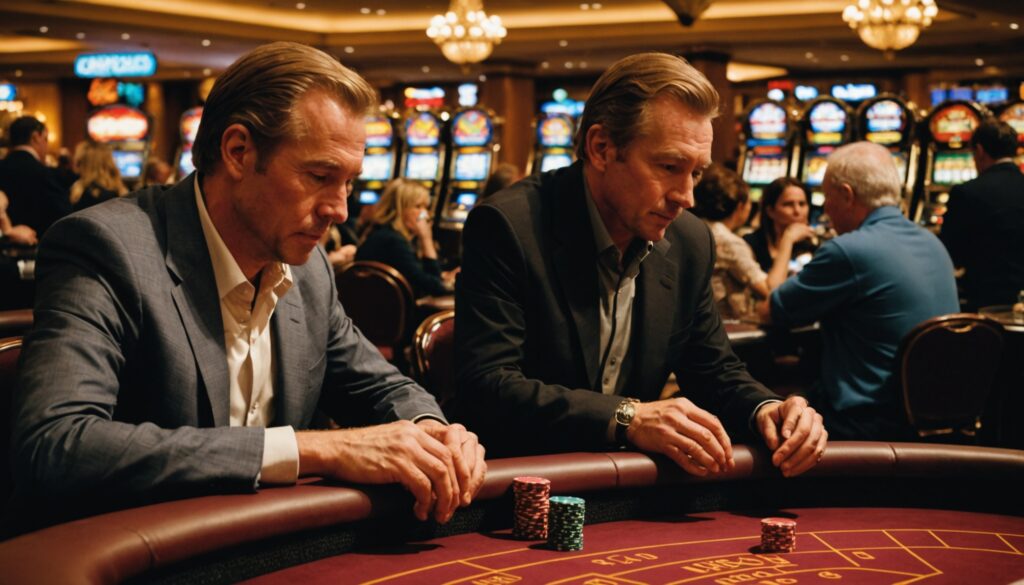

Side bets in blackjack are almost always a bad deal, but there are moments when I still place them anyway.
Right, let’s get into it. If you’ve sat at a blackjack table — in a casino, at a card room, or online — you’ve seen them. Those little circles or boxes next to the main betting area, usually with names like Perfect Pairs or 21+3, promising big payouts for specific card combinations. They’re colourful. They’re tempting. And casinos absolutely love that you’re curious about them.
I’ve been playing blackjack on and off for about eight years now, mostly at casinos in Manchester and occasionally online. I’ve thrown money at basically every side bet going at some point, sometimes out of curiosity, sometimes because I was up and feeling loose with it. So when people ask me are blackjack side bets worth it, I can give you an honest answer based on actual experience rather than just regurgitating house edge percentages at you.
Spoiler: mostly no. But the full answer is a bit more nuanced than that.
What Are Blackjack Side Bets, Actually?
Blackjack side bets are optional wagers you place at the start of a hand, separate from your main bet. They pay out based on specific conditions — usually the combination of your first two cards, or your two cards plus the dealer’s upcard. They’re resolved quickly and independently of how the main hand plays out.
Most casinos have a minimum of £1 for side bets and cap them lower than the main bet. The payouts look massive compared to the near-even-money grind of standard blackjack, which is exactly the point. A 25/1 payout sounds incredible until you work out how rarely it actually hits.
The main ones you’ll encounter in UK casinos and on UK-facing online sites are:
- Perfect Pairs – based on whether your first two cards are a pair
- 21+3 – based on your two cards plus the dealer’s upcard forming a poker hand
- Lucky Ladies – pays out on hands totalling 20, with bonuses for Queens
- Bust It – betting on whether the dealer busts, and by how many cards
- Insurance – technically a side bet, offered when the dealer shows an Ace
Insurance is in a category of its own and I’ll come to that. But let’s go through the main ones properly.
Perfect Pairs Blackjack: The Numbers Behind It
Perfect Pairs blackjack is probably the most common side bet you’ll see, and it works like this: if your first two cards are a pair, you win. But the payout depends on the type of pair:
- Mixed pair (same rank, different colour) – typically pays 5/1 or 6/1
- Coloured pair (same rank, same colour, different suit) – typically pays 12/1
- Perfect pair (identical cards, same rank and suit) – typically pays 25/1
Sounds decent, right? The problem is the house edge. On a standard six-deck game, the house edge on Perfect Pairs sits somewhere between 4% and 7% depending on the exact paytable the casino’s using. Compare that to the main blackjack game where, if you’re playing basic strategy, the house edge is somewhere around 0.5%. That’s a brutal difference.
I had a run at the Grosvenor in Manchester where I hit three coloured pairs in about forty minutes and thought I’d cracked something. I hadn’t. Over the long term, Perfect Pairs is one of those bets that delivers occasional exciting wins and consistent slow bleeds in between. I’ve done the maths on my own sessions and I’m well down on it overall.
21+3 Blackjack: The Poker Crossover Bet
21+3 blackjack is the one I find most interesting, if I’m honest. The concept is that your two hole cards plus the dealer’s upcard form a three-card poker hand, and you get paid if it’s any of the following:
- Flush – three cards of the same suit
- Straight – three consecutive cards
- Three of a kind – three cards of the same rank
- Straight flush – consecutive and same suit
- Suited three of a kind – same rank and same suit
Payouts vary massively by casino. Some places pay a flat 9/1 for any qualifying hand. Others have tiered payouts going up to 100/1 for a suited three of a kind. The house edge on 21+3 typically runs between 3.2% and 13.4% — that massive range is entirely down to the paytable. The stingier the payouts, the worse it is for you.
If you’re going to play any side bet, I’d argue 21+3 is the most defensible choice, but only at tables with the better paytables. Worth checking before you sit down. I’ve walked away from tables where the 21+3 paytable was obviously stripped back.
Insurance: Just Don’t
I know, I know — this one gets covered in every blackjack article. But I’m including it because I still see people taking it all the time, including people who should know better.
When the dealer shows an Ace, you’re offered insurance at 2/1 against them having blackjack. Sounds protective. It isn’t. The house edge on insurance is roughly 7.4% in a six-deck game. It’s one of the worst bets on the table dressed up as a safety net.
Unless you’re counting cards and have a legitimate read on the deck composition, never take insurance. This includes “even money” when you’ve got blackjack yourself — that’s the same bet, just marketed differently.
So Are Any Blackjack Side Bets Worth It?
Here’s my honest take after years of playing and losing money finding this out the hard way.
No side bet improves your expected return. None of them. The house edge on every single one is significantly higher than the base game when you’re using basic strategy. From a pure maths perspective, the correct answer is always to skip them.
But here’s where I’ll be real with you rather than just lecturing: I still place them occasionally, and I don’t feel bad about it. My reasoning:
- If I’m sat at a table with a low minimum bet (say £5) and I’m having a good session, chucking £1 on 21+3 occasionally costs me very little in expected value terms and gives me a bit of extra entertainment
- I treat it like a small lottery ticket rather than a strategy. The moment I’m placing side bets to chase losses or to try to turn a session around, that’s when it becomes a problem
- I never place them every single hand — that’s where the edge really grinds you down
The sessions where I’ve really felt the damage are the ones where I got into a rhythm of placing Perfect Pairs every hand because I was “due” a pair. That’s not how it works, and the cumulative cost over a two-hour session was genuinely embarrassing when I added it up later.
A Quick Comparison of House Edges
Just to put it all in one place:
- Blackjack (basic strategy) – approximately 0.5% house edge
- 21+3 (good paytable) – approximately 3.2% house edge
- Perfect Pairs – approximately 4% to 7% house edge
- Insurance – approximately 7.4% house edge
- Lucky Ladies – approximately 17% to 24% house edge (avoid entirely)
Lucky Ladies genuinely shocked me when I looked into it properly. I’d placed it a few times thinking it was similar to the others. It’s not. It’s absolutely terrible value and I’ll not be going near it again.
My Actual Approach at the Table
When I sit down now, my default is to ignore side bets completely and focus on playing the main hand properly. Basic strategy, sensible bankroll management, no chasing. That’s the boring but correct approach.
If I’m specifically having a fun session with a group of mates and we’re all throwing a quid on 21+3 for a laugh, I’ll join in. That’s the social side of casino gambling and there’s nothing wrong with it as long as you know what it is — entertainment cost, not strategy.
What I won’t do is sit there convincing myself that any blackjack side bet gives me a genuine edge or meaningfully improves my chances. They don’t. The casino designs them to look appealing, prices them at a much higher margin than the main game, and relies on people underestimating how much those small repeated bets add up.
Final Verdict
Are blackjack side bets worth it? Mathematically, no — not a single one of them. The house edge is significantly worse than the base game across the board, and if you’re serious about getting the most out of your bankroll, you’d skip every side bet every time and just play proper blackjack.
But gambling isn’t purely a maths exercise for most of us. If you enjoy the occasional punt on 21+3 and you’ve budgeted for it, that’s your call. Just go in with open eyes about what it actually costs you, don’t do it every hand, and definitely don’t use side bets to try to dig yourself out of a hole.
The casino’s already got the edge. No need to hand them more of it than you have to.