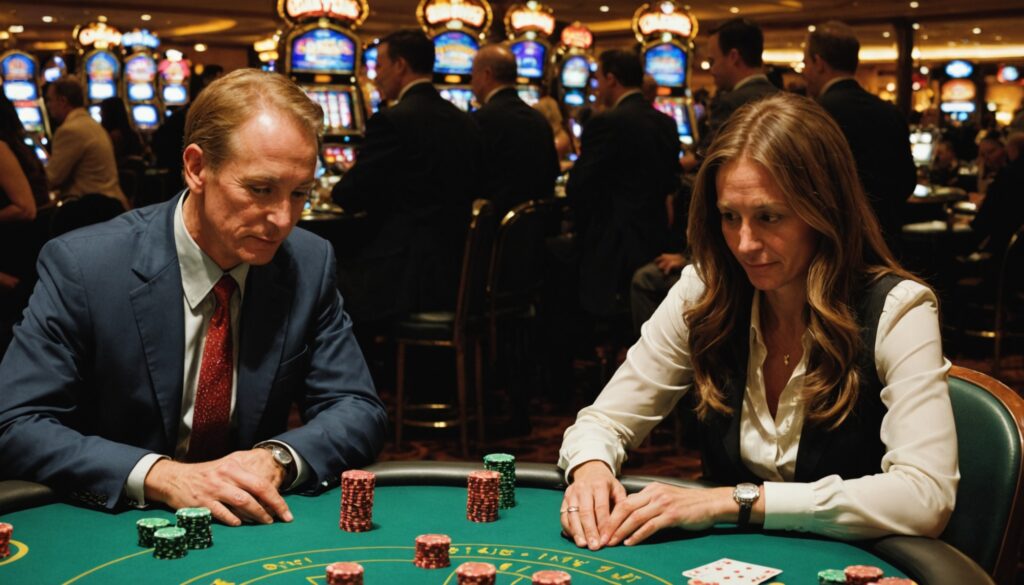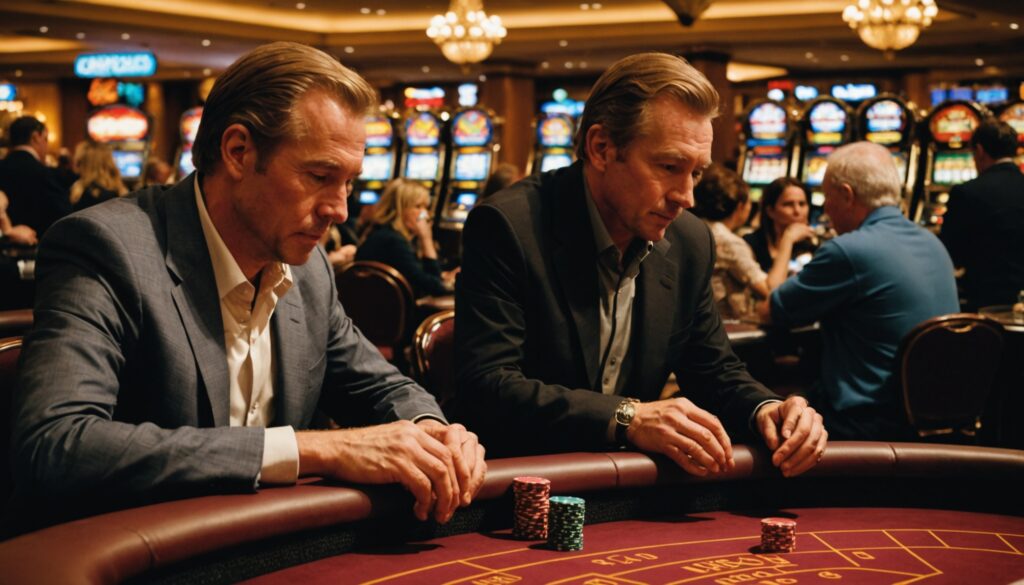
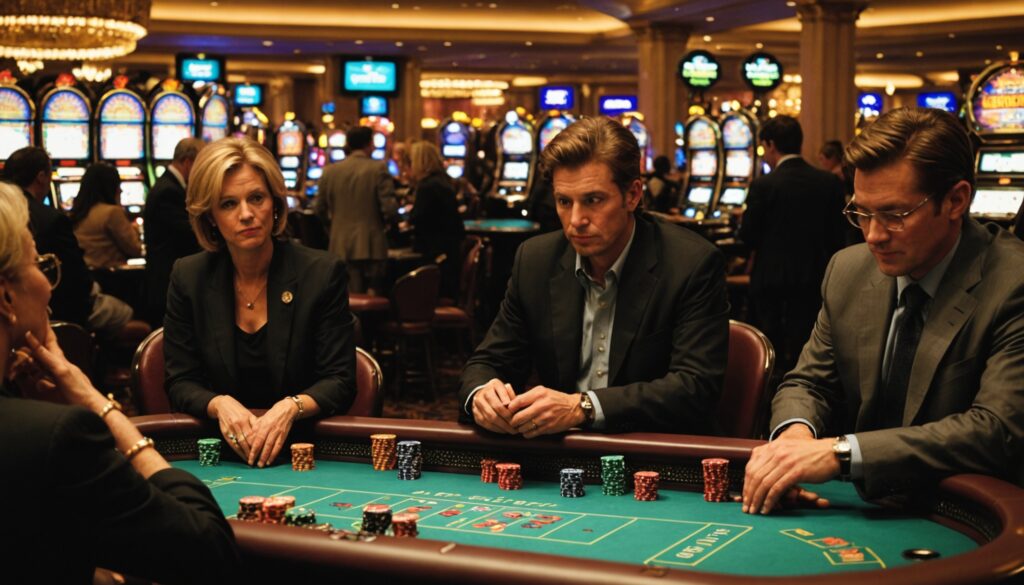
Baccarat is one of the easiest games in the casino, and the fact that it looks intimidating is basically a trick.
I avoided baccarat for years. Genuinely avoided it. Every time I walked past the baccarat tables — usually tucked away in some velvet-roped corner like they were hiding something — I kept walking. It looked serious. The players looked serious. Nobody was smiling. I assumed it was one of those games where you needed to know secret rules, hand signals, and probably own a yacht before you sat down.
Turns out I was completely wrong. Once a mate finally dragged me over and explained it in about four minutes, I felt a bit stupid for avoiding it so long. So here’s that same explanation, written out properly, for anyone else who’s been giving baccarat the wide berth it absolutely doesn’t deserve.
Why Baccarat Has This Intimidating Reputation
Part of it is the James Bond effect. Baccarat — specifically a version called Chemin de Fer — is what Bond plays in the old films. That alone gave it this aura of being a rich person’s game, something for high rollers in dinner jackets, not normal blokes having a Saturday night out.
The other part is the physical setup. Baccarat tables are often in separate rooms or roped-off sections. The minimum bets are sometimes higher than the main casino floor. The dealers dress differently. Everything about the environment screams “you probably shouldn’t be here.”
But here’s the thing — that’s all atmosphere. The actual game underneath all that theatre is dead simple. Simpler than blackjack. Simpler than roulette if you count all the betting options. Once the cards are dealt, you don’t even make any decisions. You just watch.
Baccarat Rules: What’s Actually Happening at the Table
Right, let’s get into the actual baccarat rules without overcomplicating it.
There are two hands dealt: the Player hand and the Banker hand. Before the cards come out, you bet on which one wins — or you can bet on a Tie. That’s your entire job as a player. Pick a side. The cards do the rest.
The goal is to get as close to 9 as possible. Cards are worth the following:
- Ace = 1 point
- Cards 2–9 = face value
- 10, Jack, Queen, King = 0 points
If the total goes over 9, you drop the first digit. So a 7 and an 8 gives you 15, which counts as 5. A 9 and a 6 gives you 15, also counts as 5. Once you get your head around that, the scoring clicks.
Both hands start with two cards. If either hand totals 8 or 9 — called a natural — the round ends immediately and the higher hand wins. If nobody has a natural, there are drawing rules that determine whether a third card gets dealt. You don’t control any of this. The dealer follows a fixed set of rules automatically.
That’s genuinely it. That’s baccarat explained at its core. Pick a hand, watch the cards, collect if you’re right.
The Third Card Rules (You Don’t Need to Memorise These)
I’m going to mention the third card rules because people always ask about them, but I want to be upfront — you don’t need to know them to play. The dealer handles it. You’re not making any decisions here.
For the Player hand: if the two-card total is 5 or less, the Player draws a third card. If it’s 6 or 7, they stand.
For the Banker hand: it’s a bit more complicated and depends on the Player’s third card if one was drawn. There’s a chart that covers every scenario. The dealer has this chart. You don’t need to.
If you’re playing online, the software handles it automatically. If you’re at a live table, the dealer does it. Your job remains the same throughout — you made your bet before any of this started, so just sit back.
Which Bet Should You Actually Make?
This is where baccarat for new players tends to get a bit lost, so let me be straight with you.
Bet on Banker almost every time.
The Banker bet has a house edge of around 1.06%. The Player bet is around 1.24%. Both are genuinely low compared to most casino games — slots can be 4-8%, roulette on a single-zero wheel is 2.7%. Baccarat is one of the better bets in the building.
Because the Banker wins slightly more often due to the drawing rules, casinos take a 5% commission on Banker wins. So if you bet £10 on Banker and win, you get £9.50 back in profit. Slightly annoying, but it’s still the smarter bet.
The Tie bet pays 8:1 which looks tasty. The house edge is roughly 14%. Do not bet on Tie. I’ve done it, it feels exciting for about three seconds, and then it doesn’t come in and you feel daft. Avoid it unless you’re having a flutter you know is pure gamble.
How to Play Baccarat Without Looking Like a Beginner
Here’s the honest practical stuff nobody tells you before you sit down.
- Find a mini-baccarat table if you can. These are on the main casino floor rather than the private rooms, have lower minimums, and move at a normal speed. Much less pressure than the full-size tables.
- Don’t touch the cards. At some tables players are allowed to handle the cards, at others they’re not. Watch what others do first. If in doubt, keep your hands to yourself.
- Know the bet minimums before you sit. I’ve sat down at baccarat tables thinking I was fine and found out the minimum was £25 a hand. Check the table sign before you commit.
- Ignore scorecards and pattern tracking. Every baccarat table has these elaborate road maps showing the last 20 results. Players use them to spot “trends.” There are no trends. Each hand is independent. The scorecard is fun but it won’t help you win.
- Set a loss limit before you start. Seriously. Baccarat moves fast. You can go through £100 quicker than you’d expect if you’re not paying attention.
Online Baccarat vs. Live Casino vs. Real Tables
I’ve played all three and they’re quite different experiences.
Online baccarat (the RNG version where it’s just you and a computer) is the fastest and cheapest way to learn. You can play for low stakes, there’s no pressure, and you can get comfortable with how the scoring works without anyone watching. Good for practice.
Live casino baccarat — where there’s a real dealer on a video stream — is how I play most of the time now. It’s got the atmosphere without needing to go anywhere. The dealers are usually decent, the pace is manageable, and you can chat in the sidebar if you want to feel like a human being. Stakes vary but you can usually find tables starting from £1-£5 a hand.
Real casino baccarat is the full experience. Bit more intimidating the first time, genuinely enjoyable once you’re settled. The private baccarat rooms can feel quite intense — lots of serious players, higher stakes, people tracking scorecards intensely. The main floor mini-baccarat is more relaxed. I’d start there.
Honest Conclusion: Should You Give Baccarat a Go?
Yeah, I reckon you should. Especially if you’re the type who usually sticks to slots or sticks to roulette out of habit. Baccarat gives you a low house edge, a simple decision, and a fast-paced game that doesn’t require you to think hard after a few pints.
The intimidating reputation is mostly nonsense propped up by the way casinos present it. The game itself is genuinely one of the most beginner-friendly things on the floor once someone takes five minutes to explain it properly.
I lost £40 the first night I played it, won £65 the second, and have been playing it on and off ever since. It won’t make you rich. Nothing in a casino will. But as far as ways to have a decent evening and not get absolutely mullered by the house edge, baccarat’s right up there.
Give it a go on a live casino first if you want to ease in. No pressure, no velvet ropes, no one watching you figure out the scoring. Just you, the Banker bet, and hopefully a decent run of cards.