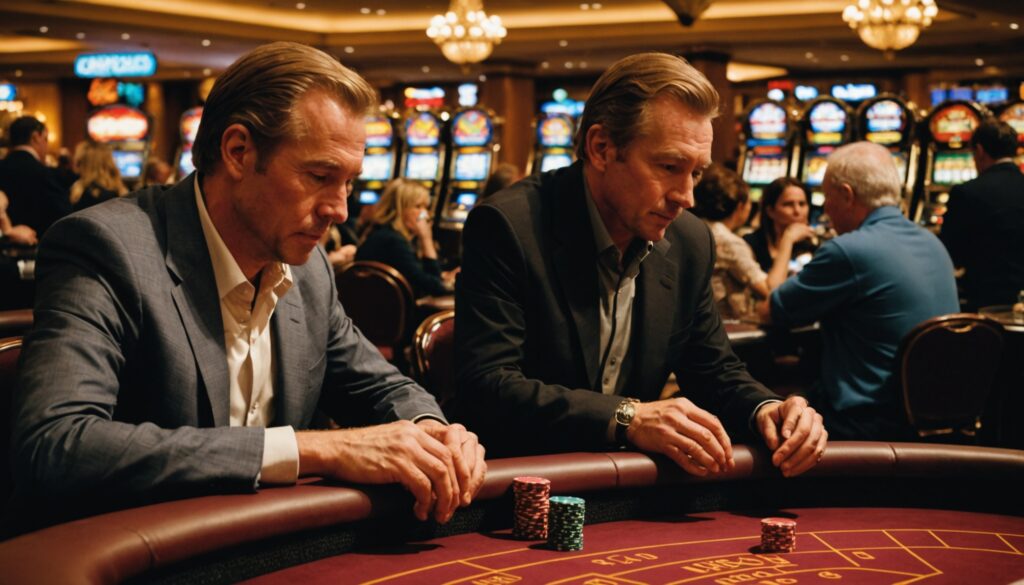
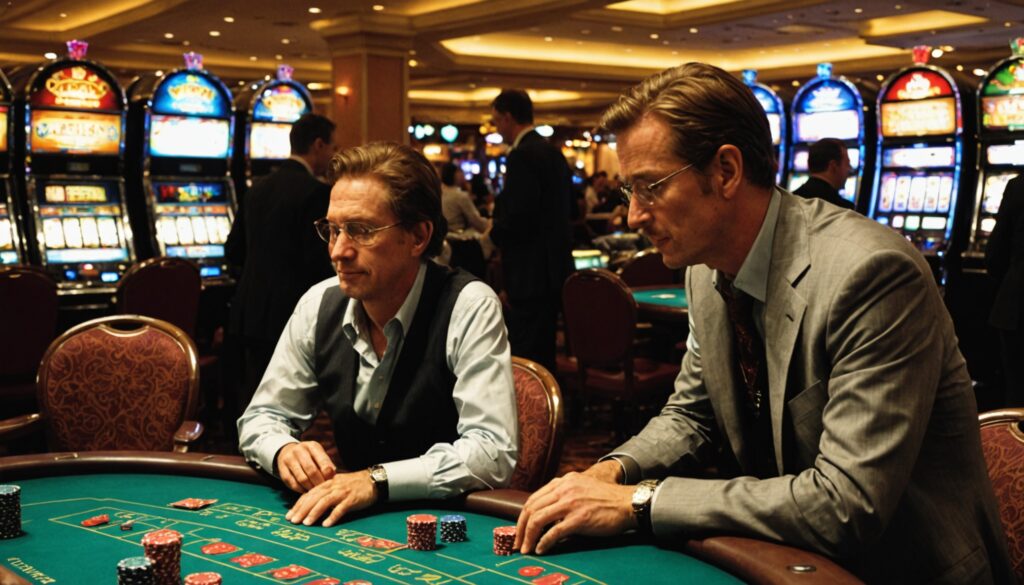
Card counting in blackjack sounds brilliant in theory, but in practice it’s a grind that most casual players will give up on before they ever profit from it.
I’ve been playing blackjack on and off for about eight years now — mostly in UK casinos, the odd trip to Vegas, and way too many hours on online tables I probably shouldn’t have sat down at. And card counting? I’ve gone down that rabbit hole. Read the books, practised at home, tried it live. So let me give you the honest version, not the romanticised Hollywood one.
What Card Counting Actually Is (And What It Isn’t)
First things first — card counting isn’t some magical cheat code. You’re not memorising every card in the deck like a human computer. The basic idea is much simpler: you track the ratio of high cards to low cards remaining in the shoe. When there are more high cards left (tens, aces), the deck favours the player. When it’s full of low cards, it favours the dealer.
The most common system for learning card counting is Hi-Lo. Here’s how it works:
- Cards 2–6: Count as +1 (low cards, good for dealer, bad for you)
- Cards 7–9: Count as 0 (neutral, ignore them)
- Cards 10, Jack, Queen, King, Ace: Count as -1 (high cards, good for you)
You keep a running total in your head as cards are dealt. When that count goes positive, you bet more. When it’s negative, you bet the minimum and wait. Simple enough on paper. Absolutely maddening in a real casino at 11pm after three pints.
How Hard Is It to Actually Learn Card Counting?
Here’s where I’m going to be straight with you: the counting itself isn’t the hard part. Most people can get decent at maintaining the running count after a week or two of practice at home. What absolutely destroys people — including me the first few times — is doing it under real conditions.
Think about everything happening at a live blackjack table:
- Other players making decisions slowly while you’re trying to keep count
- Dealers who shuffle faster than you’d like
- Cocktail waitresses, loud music, people chatting to you
- The pressure of having actual money on the table
- Trying not to look like you’re counting
That last one is crucial. If you’re visibly concentrating, moving your lips, or suddenly tripling your bet every time the count gets juicy, the pit boss will clock you within twenty minutes. I’ve seen it happen to people. I’ve had it happen to me — more on that in a minute.
To genuinely learn card counting to a competent level, you’re looking at months of consistent practice. Not an afternoon. Months. You need to be able to count down a full deck in under 30 seconds, maintain the count while holding a conversation, and convert to a “true count” (adjusting for how many decks are left) without breaking a sweat.
Does Card Counting Actually Give You an Edge?
Technically, yes. A skilled card counter using Hi-Lo with perfect basic strategy can flip the house edge from roughly -0.5% to somewhere between +0.5% and +1.5% in favourable conditions. That’s a real mathematical advantage.
But here’s the thing people gloss over: that edge only materialises over thousands of hands. In the short term, variance will eat you alive. You can have a perfect count, make the right big bet, and still lose four hands in a row. That’s not the system failing — that’s just how blackjack works. You need a bankroll big enough to absorb the swings, and you need to play a lot of hands to see the edge show up in your results.
For a casual player popping into a casino once a month? The maths genuinely doesn’t work in your favour. You won’t play enough hands for the edge to kick in consistently, and one bad session can wipe out months of theoretical gains.
Is Card Counting Legal in the UK?
Right, let’s clear this up because people always ask. Is card counting legal? Yes — completely. Card counting is not cheating. You’re not using a device, you’re not colluding with the dealer, you’re just using your brain. There’s no law in the UK (or anywhere else I’m aware of) that makes it illegal.
However — and this is the bit that matters — casinos are private businesses and they can refuse service to anyone. If they suspect you’re counting, they don’t need proof, they don’t need to explain themselves, and they don’t need to be polite about it. They can shuffle the deck mid-shoe, reduce your maximum bet, or simply ask you to leave and not come back.
I got a very firm word from a floor manager at a casino in Manchester a few years back. I wasn’t even counting particularly well — I was just varying my bets more than they liked. He didn’t accuse me of anything directly, but the message was clear: keep your bets flat or take a walk. That’s the reality of blackjack card counting in the UK. Legal? Yes. Tolerated? Not for long if you’re any good at it.
Casino Countermeasures — They’re Better at This Than You Are
Modern casinos — especially the larger UK ones — have seen everything. They’ve got countermeasures layered up specifically to make card counting as difficult and unprofitable as possible:
- Multiple decks: Most UK casino blackjack uses 6–8 decks. More decks mean the true count shifts more slowly and is harder to exploit.
- Early shuffle points: They’ll cut off the last 1–2 decks of the shoe, meaning you rarely see the cards that actually matter most. This kills penetration — the key variable for counters.
- Continuous shuffle machines (CSMs): Some tables use these, which essentially make counting impossible. If you see one of these, just walk away.
- Bet spread limits: They watch for people suddenly moving from £5 to £50 bets. It’s a red flag. If you can’t spread your bets meaningfully, your edge shrinks massively.
- Surveillance: Modern casinos use facial recognition, AI-assisted tracking software, and shared databases between venues. If you get flagged in one place, it can follow you.
Even professional card counting teams — people who do this for a living — struggle to find profitable games consistently anymore. The casinos have simply made it too hard.
So Should a Casual Player Bother?
Look, I’m not going to tell you not to learn it. There’s genuine satisfaction in understanding how card counting works — it makes you think about blackjack differently and it’ll absolutely tighten up your basic strategy. I still find myself mentally tracking cards sometimes just out of habit. It’s a fun intellectual exercise.
But if your goal is to make money at the casino? Be honest with yourself about a few things:
- Are you prepared to put in months of real, boring practice before you ever try it live?
- Do you have a bankroll of at least £2,000–£3,000 that you can afford to see swing wildly before it grows?
- Can you play with the emotional detachment of someone who doesn’t care if they lose on any given session?
- Are you willing to get barred from casinos you actually enjoy going to?
For most casual players, the honest answer to most of those is no. And that’s fine. There’s nothing wrong with playing blackjack with solid basic strategy, keeping your bets sensible, and accepting that you’re paying a small fee for an entertaining night out. That’s what I do most of the time now.
The Honest Conclusion
Card counting in blackjack is one of those things that sounds transformative and turns out to be mostly impractical for normal people living normal lives. The theory is real, the edge is real, but the gap between understanding it and actually profiting from it is enormous — and the casinos are doing everything they can to make that gap bigger.
If you want to learn card counting as a hobby, as a way to understand the game better, go for it. Ed Thorp’s Beat the Dealer is still worth reading. Practise with a deck at home. It’s interesting stuff.
But if someone’s told you that card counting is your ticket to beating the casino regularly as a casual player? They’re selling you a dream that doesn’t really exist in 2024. The best thing you can do at a blackjack table is learn perfect basic strategy, find a table with decent rules, and manage your money sensibly. Less glamorous than the MIT Blackjack Team. Considerably less likely to end with you getting escorted out of a casino in Manchester, though.