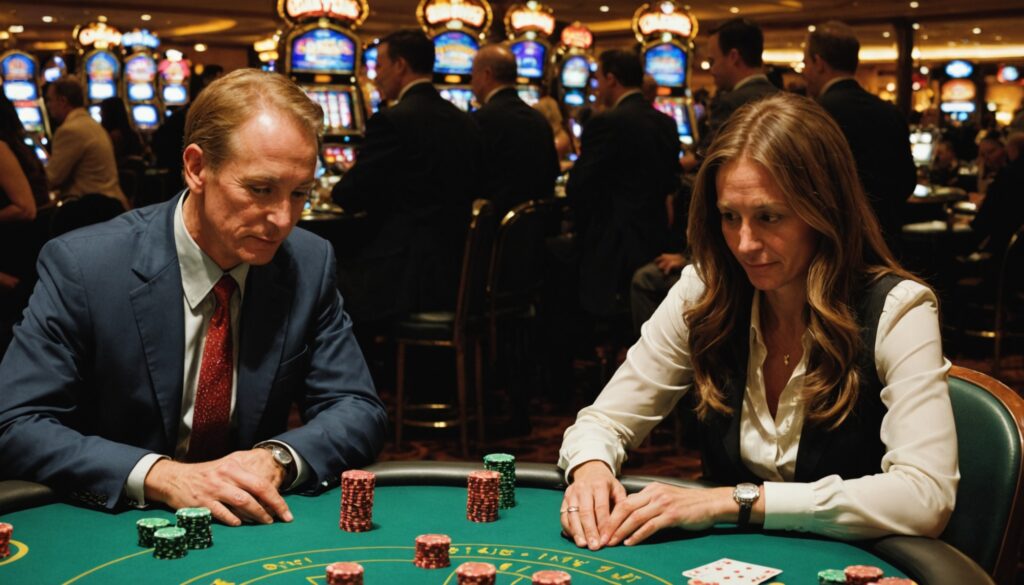
Last Saturday I lost £340 in under three hours, and almost every penny of it was avoidable.
I’ve had bad nights before. Anyone who gambles regularly has. But this one stung differently — not just because of the money, but because I knew what I was doing wrong in real time and kept going anyway. That’s the bit that’s hard to sit with. So I’m writing this up properly, partly to process it, partly because maybe someone else recognises themselves in it and pulls the handbrake a bit sooner than I did.
This is my full breakdown of the worst casino night I’ve had in years — the casino loss story I didn’t want to write, but probably needed to.
How the Night Started (Fine, Then Not Fine)
It wasn’t supposed to be a big session. Me and a mate had a free Saturday, we’d both had decent weeks, and a trip to the casino felt like a reasonable way to spend an evening. Budget was £100 each. Sensible. Manageable. We’ve done this loads of times.
I started on blackjack, which is my game. I know basic strategy reasonably well, I don’t tilt easily on that table, and I usually keep my head. First hour was actually decent — I was up about £60, which put me £160 ahead of where I needed to be to have a good night. That’s the moment, right there. That was the moment to set a stop-loss, bank some of the profit mentally, and play conservative.
I didn’t do any of that.
The First Big Mistake — Changing Tables After a Win
My mate wanted to move to roulette. I was on a good run at blackjack, feeling confident, and instead of staying put I followed him. Classic mistake. There’s no logic to it — roulette is a worse game for me mathematically, I’m not as comfortable with it, and I was essentially abandoning a position where I was ahead because of social pressure and a bit of boredom.
Within twenty minutes at the roulette table I’d given back the £60 profit and was down about £30 on my original £100. Still recoverable. Still not a bad gambling night by most standards.
But here’s the thing about being slightly down — it activates something in your brain that being level or ahead doesn’t. You stop thinking about enjoying the session and start thinking about getting back to zero. And once you’re chasing zero, you’re already in trouble.
Where It Really Fell Apart — The Chase
This is the honest part. The part I’m not proud of.
After losing that first £100 buy-in, I went to the cashpoint. Now, I’ve got a rule — one trip to the cashpoint maximum, and only if I’m still within what I can genuinely afford to lose. I took out another £100 and told myself I was just getting back to where I started. That’s not how gambling works, but that’s how your brain frames it at the time.
I went back to blackjack, because roulette was clearly not going my way. And for a while, it helped. I clawed back maybe £50. Then I had a horrible run of hands — dealer hitting on 16 and making it four times in a row, me busting on 13 twice — and the second £100 was gone in about forty minutes.
Third trip to the cashpoint. £140 this time, because that’s what was left in my account that I felt I could use. At this point I was fully in chase mode, which is the worst possible headspace for any casino game. I wasn’t making decisions — I was reacting. Betting bigger to recover faster, splitting hands I shouldn’t have split, doubling down in spots that didn’t make sense because I needed the win to feel big enough to matter.
That £140 lasted maybe half an hour.
What Was Going Wrong Mentally
Looking back on it, there were several clear psychological failures happening simultaneously — and this is the bit I think is worth breaking down properly, because a bad gambling night isn’t usually just bad luck.
- Sunk cost thinking: Every time I lost more, I felt more committed to getting it back. The money already lost started to feel like a debt I owed myself, rather than gone money that couldn’t be recovered.
- Session reframing: I kept mentally resetting what “breaking even” meant. First it was £100, then it was £200, then it was “just get back to £280 and you can go home.” The goalposts moved constantly.
- Emotional betting: My stake sizes were no longer based on any kind of logic. I was betting £20-25 a hand when I should’ve been at £10 maximum given my remaining bankroll. Bigger bets felt like faster recovery. They’re not. They’re just faster losses.
- Social inertia: My mate was still there having a reasonable night. Leaving felt like giving up. That’s a ridiculous reason to lose an extra £150 but there it is.
None of this is unique to me. This is textbook stuff. I’ve read about it, I understand it intellectually, and I still walked straight into every single one of these traps on the same night. That’s what makes a worst casino night loss feel so brutal — it’s not just the money, it’s knowing you had the information and ignored it.
The Strategic Errors (Separate From the Mental Ones)
Even if my head had been in the right place, I made some genuinely poor tactical decisions worth calling out:
- No stop-loss set when I was up: Being £60 up at blackjack was a great position. I had no plan for what happened if that profit evaporated, so it just… did.
- Moving to a worse game: Roulette at a standard European table has a house edge of about 2.7%. Blackjack with basic strategy is closer to 0.5%. I voluntarily made my situation mathematically worse.
- Abandoning basic strategy under pressure: When I’m stressed and chasing, I make crying calls — hitting when I should stand, not doubling in obvious spots because I’m scared to put more money out. Ironically, playing scared usually makes the strategy worse and the losses faster.
- No hard cash limit before I left the house: I had a rough budget but no physical hard stop. If I’d left the house with £100 cash and no bank card, the night ends at £100 down. Instead it ended at £340 down because access was too easy.
The Walk Home
There’s a specific feeling after a losing at casino kind of night that I imagine most gamblers know. It’s not dramatic. There’s no rage or tears. It’s just this flat, quiet, slightly sick feeling in your stomach as you work out what that money actually represents in real terms. A week of lunches. A chunk of a bill. Something you’d saved for. Whatever it is for you.
For me it was £340 on a Saturday night that I’d budgeted £100 for. My mate lost about £80 and had a fine time. We got the same night. I just handled mine badly.
I didn’t sleep brilliantly. Not because of guilt exactly — I can afford the loss, it won’t change my month meaningfully — but because of the self-awareness of having made avoidable mistakes in real time and choosing not to correct them. That’s the bit that sticks.
What I’m Taking Away From This
I’m not quitting gambling. I enjoy it, I go into it with my eyes open, and one horrible night doesn’t change the overall picture. But I am making some actual concrete changes, not just vague promises:
- Cash only from now on — whatever I take out at home is the budget, full stop. Bank card stays in my jacket pocket, not my wallet.
- If I’m up 60% on my starting stack, I set a floor — I won’t let a winning position turn into a loss without making a deliberate decision to keep playing.
- I don’t follow people to worse games. If blackjack is going well and someone wants to move to roulette, I stay. Simple.
- Three strikes rule on the chase — if I’ve rebought twice, the session is over. No third cashpoint visit. Non-negotiable.
Whether I’ll actually stick to those in the moment — honestly, I don’t know. But writing this out helps. If you’ve had your own worst casino night loss recently and you’re reading this feeling a bit seen, that’s why I wrote it. Not to lecture anyone, not to pretend I’ve got it figured out. Just to be straight about what a bad gambling night actually looks like from the inside, without dressing it up.
It looks like this. It feels like this. And the only thing that makes it slightly useful is deciding to learn something from it.