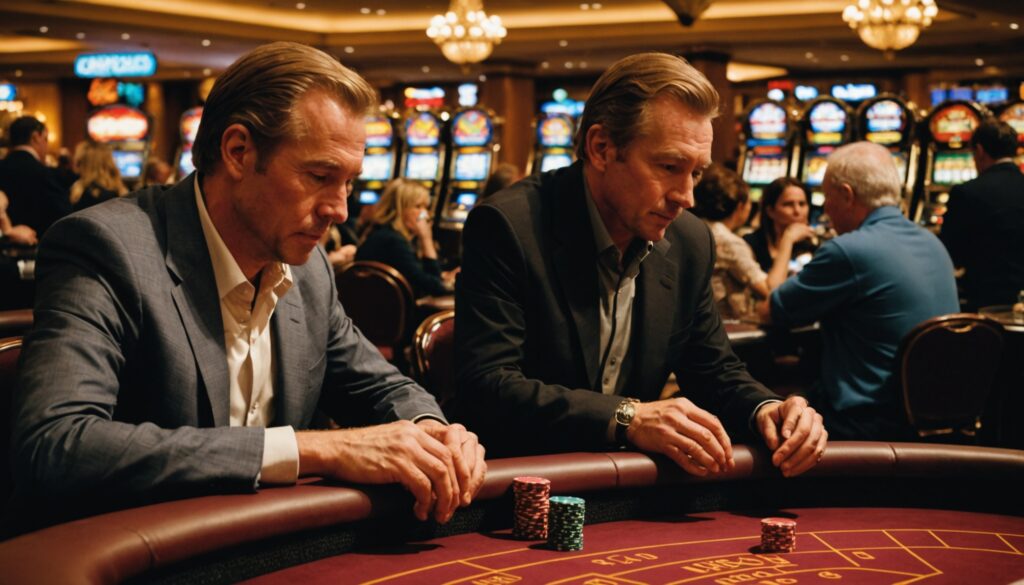

I blew £400 in 45 minutes on a slot machine, and it’s the best lesson I ever paid for.
Right. So. I’ve been sitting on this one for a while because honestly it’s a bit embarrassing to write about. But I think it’s worth putting out there because I see people making the same mistakes I made, and maybe reading this saves someone a few quid. Or a lot of quid, as it turned out in my case.
This was my worst slot machine session loss — not just in terms of money, but in terms of how completely avoidable the whole thing was. I knew better. I just didn’t act like it.
How It Started: A Saturday Night and a Stupid Mindset
It was a Saturday. I’d had a decent week at work, I was in a good mood, and I fancied a session on the slots. I’d won about £80 the previous weekend on some low-stakes spins so I was feeling, let’s say, overconfident. That’s the first problem right there.
I sat down with what I told myself was a £100 budget. I want to be upfront about that — I started with a plan. A bad plan as it turned out, but I had one. The issue is that “having a budget” and “actually sticking to your slot machine bankroll” are two completely different things, and I learned that distinction the hard way.
I was playing online, which I think actually makes it worse. There’s no physical chips, no walk to the cashier, nothing to slow you down. You just top up and keep going. It’s frictionless in a way that really isn’t good for you when things start going south.
The Game That Did It: High Volatility Is Not Your Mate
I’d been messing around with a high volatility slot — one of those ones with a massive maximum win, a dramatic theme, and bonus rounds that feel like they’re always just one spin away. I won’t name it specifically but you know the type. Big potential, long dry spells, and a base game that eats your balance quietly while you’re waiting for something to happen.
This is what I’d call the high volatility trap, and it’s where most serious slot machine loss stories start. High volatility games are designed so that wins come infrequently but can be big when they land. In theory, that sounds exciting. In practice, if you don’t have a genuinely deep bankroll and iron discipline, you will go broke waiting for a hit that may or may not come.
Here’s the thing about high volatility slots that nobody really explains properly:
- The RTP is almost irrelevant in the short term. A 96% RTP means nothing over 200 spins. It’s a long-term statistical figure.
- Variance is brutal. You can go 300 spins without a meaningful win. That’s not bad luck — that’s the game working exactly as intended.
- The bonus round is dangled constantly. Near misses, teaser animations, one scatter short of a feature — it’s all designed to keep you spinning.
I knew all of this. I really did. And I still fell into it face-first.
Where the Wheels Came Off: The Chase
My first £100 went in about 20 minutes. Not in one go — it bled out slowly across a load of small spins with nothing to show for it. A few tiny wins here and there, maybe getting back £15 of every £100 I was cycling through.
Now here’s the part of this slots bad session I’m most ashamed of. Instead of closing the tab and calling it a night, I thought: I’m due a bonus. It’s coming. I’ll just top up another £50 and ride it out.
This is the gambler’s fallacy in real time. The slot does not know or care how long since the last bonus. Every spin is independent. The machine isn’t building up to something. But in the moment, after watching the reels tease you for 20 minutes, your brain genuinely starts to believe the bonus is imminent.
So I topped up £50. Then another £50 when that went. Then a full £100 because I told myself I’d play at a lower stake and grind it back. Then another £100 because I’d bumped my stake back up after a near-miss on the feature.
By the time I properly stopped and looked at what I’d deposited, it was £400. In 45 minutes. The worst slot machine session of my life, and I’d orchestrated the whole thing myself.
The Bankroll Management Failure — Breaking It Down
Let me be specific about what I did wrong with my slot machine bankroll, because I think it’s useful to actually name the mistakes rather than just say “I lost control.”
- I didn’t set a hard stop-loss before I started. I had a rough figure in my head but nothing locked in. No deposit limit set on the site, no timer, nothing external to enforce it.
- I chased losses. Every single top-up was justified in my head as “just giving it one more go.” Classic escalation.
- My stake wasn’t proportional to my bankroll. I was spinning at a level where 100 spins would eat my whole session budget. That’s not a session — that’s a coin flip dressed up as entertainment.
- I picked the wrong game for the night. If I wanted a longer session, I should’ve been on something low volatility with frequent small returns. High variance slots need deep pockets and a clear head. I had neither.
- I was playing when I wanted to win, not just play. There’s a difference. When you need to win to feel okay about the session, you’ve already lost the plot.
What a Sensible Session Would Have Looked Like
I’ve thought about this a lot since. Here’s what I should have done differently — not to guarantee a win, because you can’t, but to avoid that kind of catastrophic slot machine loss.
Set the budget before you open the site
Decide on your number when you’re calm, not mid-session when you’re chasing. And use the deposit limits that online casinos are required to offer. Actually set them. They work.
Match your stake to your bankroll properly
A rough rule I try to follow now: your session budget should cover at least 100-200 spins at your chosen stake. So if you’ve got £50 to play with, you’ve got no business spinning at £1 a go. You’d be looking at 50p max, probably less on a high volatility game.
Pick the right game for the right night
High volatility slots are fine if you accept the variance and have the bankroll to weather it. But if you want entertainment and a reasonable session length, play something with a lower variance. Less dramatic, but your £50 lasts longer than eight minutes.
Walk away after the first budget is gone
This sounds obvious. It isn’t, when you’re in it. But the moment you start topping up to chase, the session is over. You’ve just not accepted it yet.
The Honest Conclusion: I Was the Problem
Look, I’m not going to blame the casino or the game. The slot worked exactly as advertised — high volatility, infrequent wins, massive potential upside I never hit. That’s the game. I chose it. I kept playing it after I should have stopped. I ignored my own rules.
This slots bad session cost me £400 and about three days of feeling properly stupid about it. But it’s also the session that made me finally get serious about how I manage a bankroll, set limits, and choose games. I haven’t had anything close to a loss like that since, mostly because I now treat that story as the cautionary tale it is.
If you’re reading this and you’ve had a similar worst slot machine session loss, firstly — you’re not alone, and secondly — the pattern is usually the same. It’s not really about the slot. It’s about what you do after the first budget disappears.
The game is designed to keep you spinning. The only person who can actually stop you is you.
Gamble with what you can afford to lose. Set limits before you start. And if you’re chasing — stop. Just stop.